
Built by GPBMU.
Delivered worldwide.
GPBMU builds the machines that clean and maintain skyscraper facades. Here are eight buildings where their work hangs off the roof, from New York to Dublin.
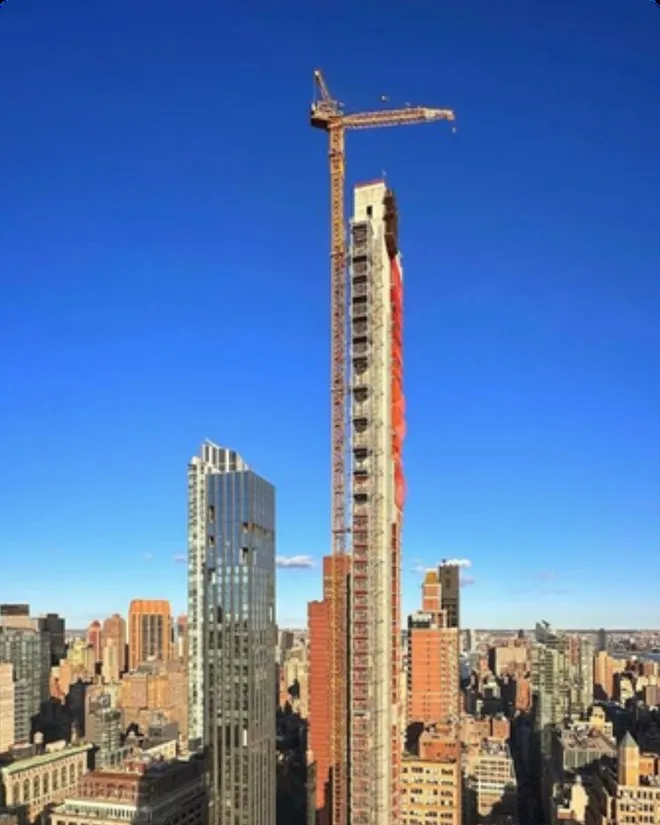
262 Fifth
Avenue
The tallest building GPBMU has ever equipped. The machine on its roof weighs 39.3 tonnes, runs on its own concrete track, and reaches a 13-metre cradle out over the edge. Its lifting hoist takes 3.4 tonnes, the biggest GPBMU has ever shipped.
MET
Tower
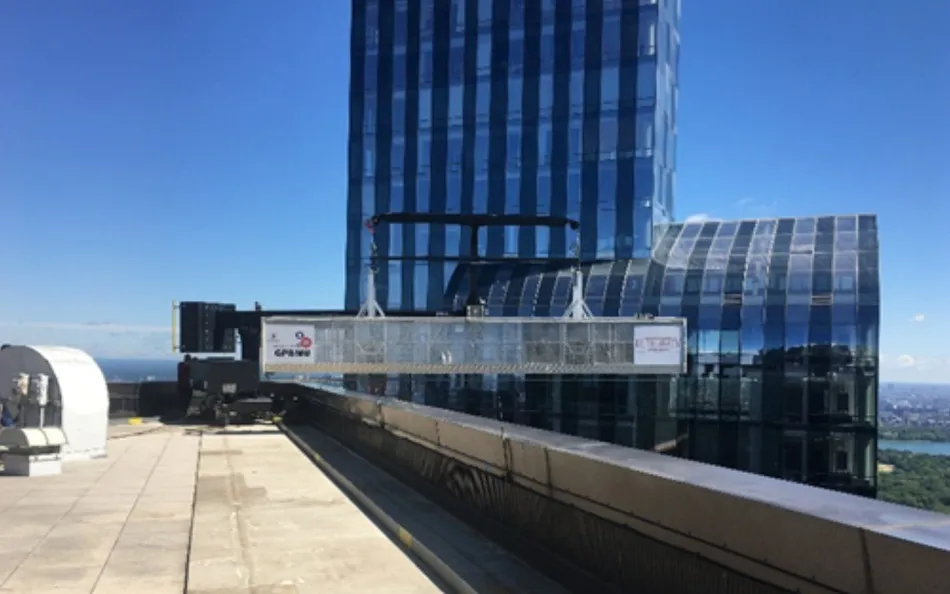
One of the tallest buildings a GPI machine works on. It rides a concrete track around the roof and swaps between two cradles: a 5-metre one for everyday work and a 10-metre one for the facade's longer stretches.
Foster
Tower
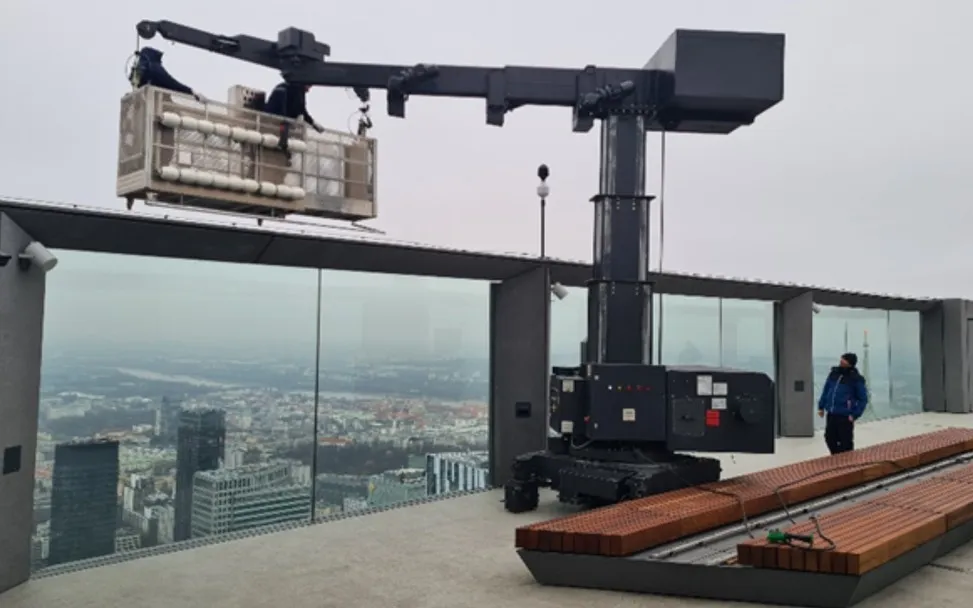
Warsaw's stepped tower needed a machine that could fold and stretch, so the 23-tonne unit on its roof does both. The jib telescopes out and folds away, and a 1,000 kg hoist handles the lifting.
Forest
Tower
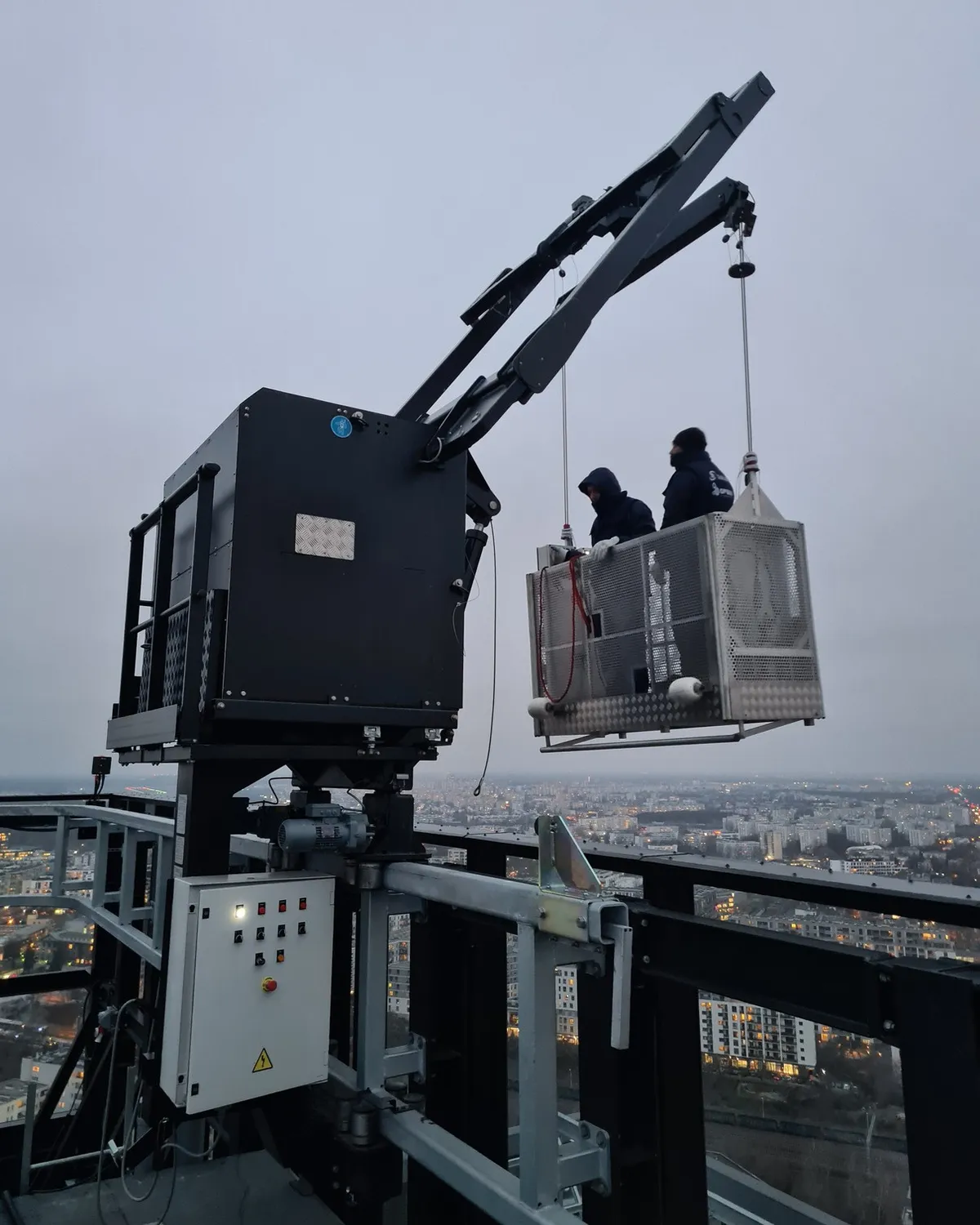
Forest Tower's facade changes shape as it rises, so one machine wasn't enough. The main unit lowers operators down the curtain wall on its double jib; a second, smaller one covers the upper setbacks the first can't reach.
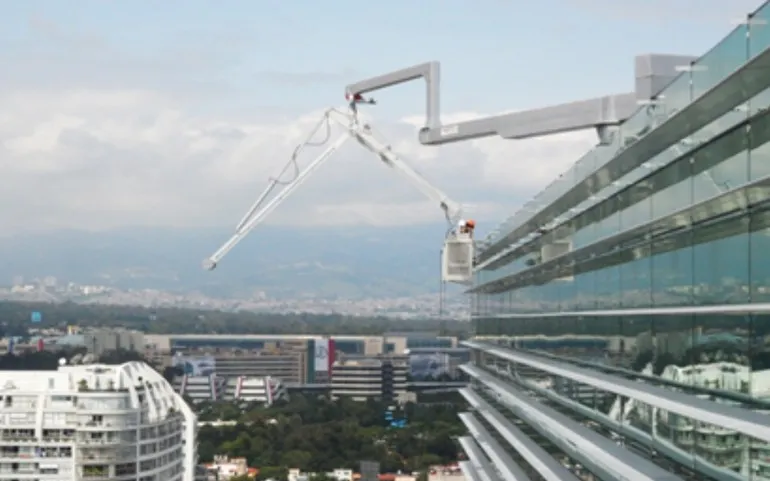
Nestlé
Headquarters
The jib on this machine reaches 18 metres out, across a facade that steps in and out in tiers. For the tight corners there's a smaller 4-metre cradle that operators position by hand.
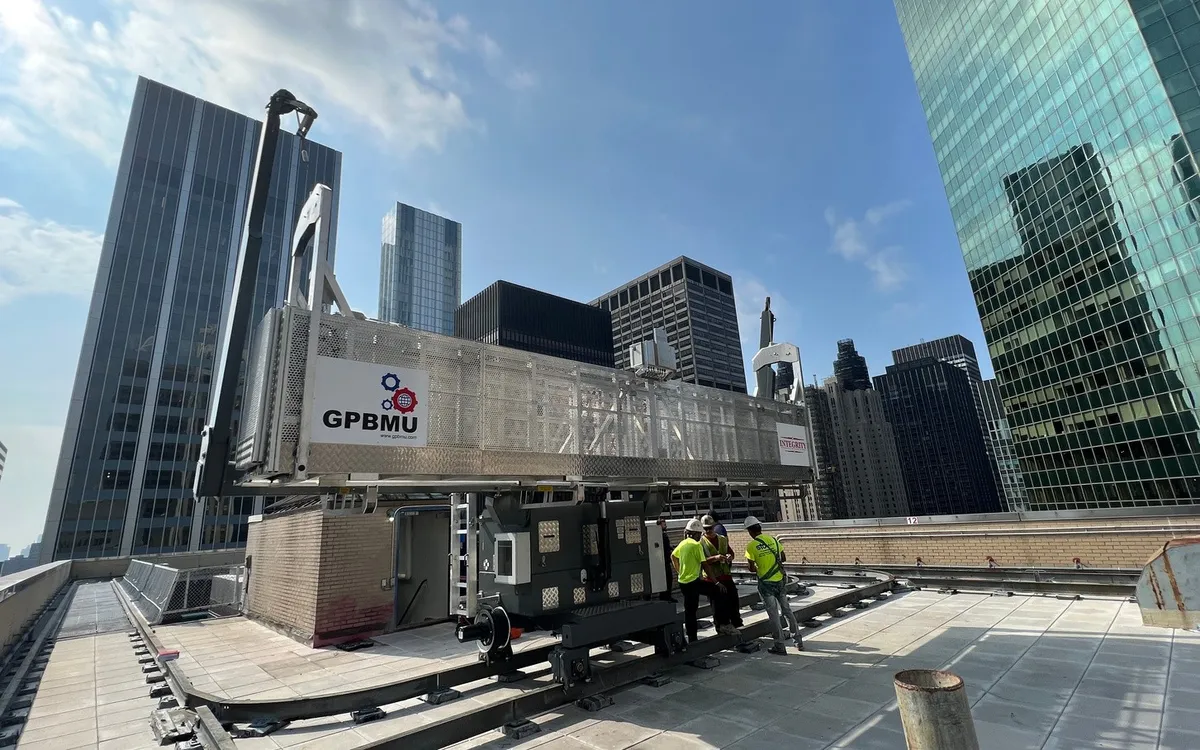
390 Park
Avenue
High above Midtown, this machine's cradle stretches from 7 to 12 metres to reach across the building's setbacks. A small footprint on the roof, a long reach over the edge.
Hachette
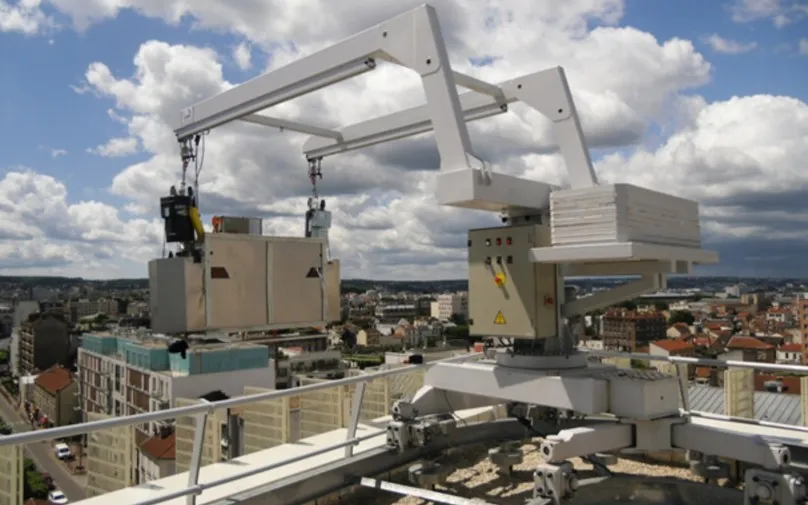
Headquarters
Two machines share the roof of Hachette's Paris headquarters. Each one turns a full half-circle in both directions, and the cradle swaps between platform and monorail mode depending on the job.
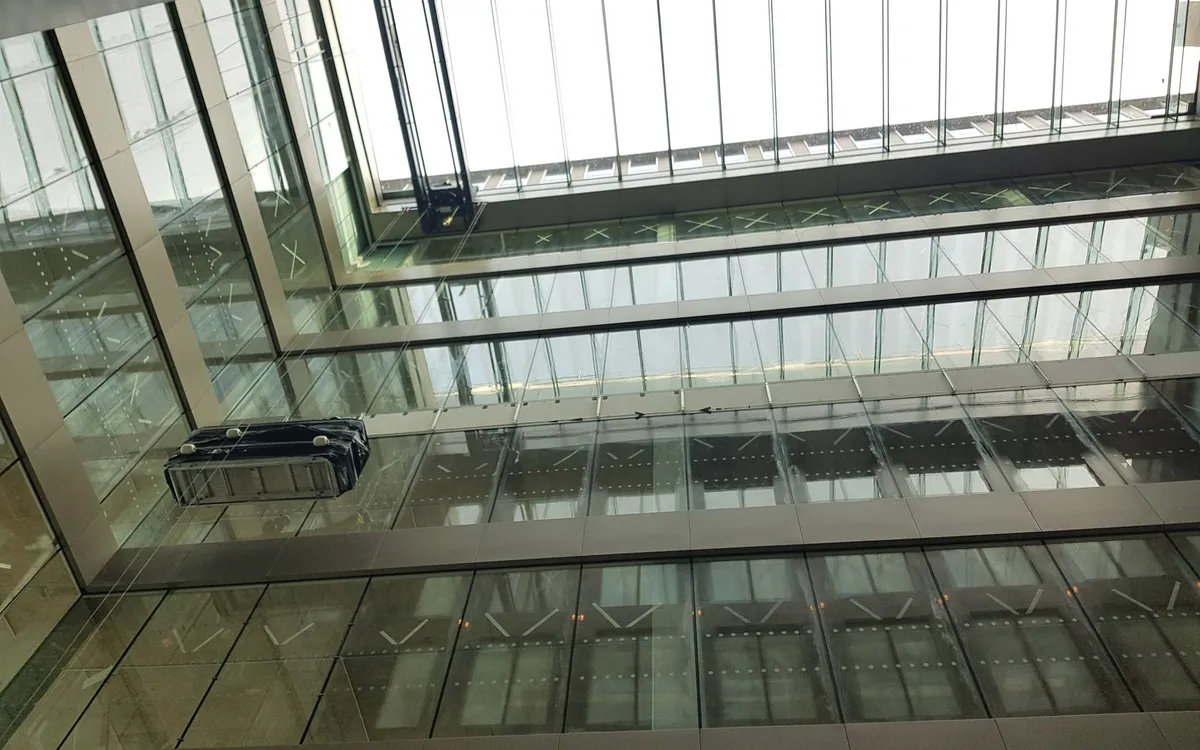
Dublin
Landing
Not every facade is outdoors. Inside Dublin Landing's glass atrium, four units run along an aluminium monorail, swapping cradles depending on whether it's glass, stone or steel that needs attention that day.
Let's open
new doors.
Tell us about your building and we'll tell you which machine fits, and what it takes to get it on the roof.